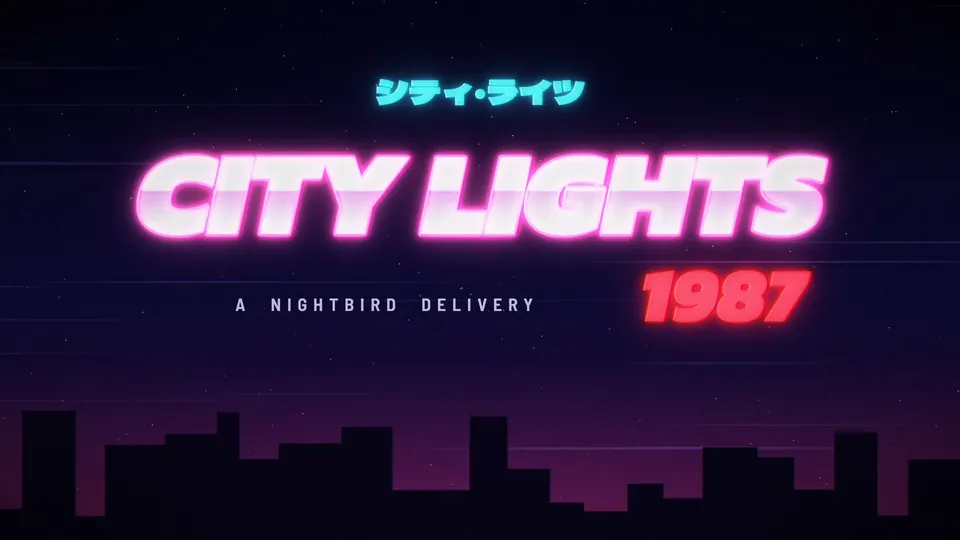
Video style · 80s cel anime
Anime style videos from the cel era.
An anime style video borrows the craft of hand-painted cel animation: flat two-tone characters over airbrushed backgrounds, backlit neon, held drawings and speed lines, played back like a late-eighties videotape on a CRT. It suits stories with one hero, one goal and one deadline, from music videos and game trailers to a product launch told as a race.
- Example
- City Lights, 1987, 0:59
- Drawn with
- Code, no footage
- Works on
Last updated
The example, moment by moment
What happens in City Lights, 1987
After the rain, a courier nicknamed Nightbird rides a white motorbike across a neon city to deliver a pilot's forgotten cassette to the launch pad before a dawn rocket launch. One hero, one goal, one deadline.
-
A CRT powers on with a thunk and a line whine. After the rain, a courier gets a call: a pilot's cassette has to reach the launch pad before dawn.
-
The title hit. Chrome italic letters glow through the frame as the white motorbike sets off, and the score opens up with the city lights.
-
A momentum montage: parallax neon streets, speed lines, wet asphalt reflections, and a coral scarf that reads as the hero's one accent colour in every lighting set.
-
The obstacle. A drawbridge rises with red warning lights, and the cockpit cassette deck plays the song inside the story for one bar before the score opens back up.
-
The jump. After one beat of true silence the peak freezes as a painted still, a backlit silhouette with an orange rim.
-
Night becomes dawn. The colour model changes to periwinkle and rose as the rocket lifts, and tape artefacts punctuate the end card.
What the 80s cel anime look is made of
- 01
Four layers
A painted background, flat cels, backlit light and a videotape playback pass. The contrast between them is the look; if a frame looks like modern digital anime, a layer is missing.
- 02
Painted backgrounds
Soft airbrushed gradients, glowing windows and wet reflections, painted once and only slid behind the action.
- 03
Flat cels with coloured lines
Characters and vehicles are flat fills with hard-edged shadow and highlight shapes. Outlines are dark versions of their fill, never black, stepped at 12 or 8 frames a second.
- 04
Backlit light
Signs, lamps, tail lights and title letters glow through the frame, with flares and halation, so light is a character of its own.
- 05
Speed grammar
Speed lines, looping plates, impact frames and held drawings turn limited animation into momentum, and stillness into drama.
- 06
Tape on a CRT
Chroma bleed, scanlines, a phosphor glow, darkened corners and tracking noise. No film scratches or gate weave: this is tape, not print.
Best for
- Music videos and lyric videos
- Game and app trailers
- Nostalgia campaigns and retro product drops
- A launch told as a race against a deadline
- Creator intros and channel openers
Not for
- Explainers with numbers and steps
- Corporate or clinical brands
- Daylight product photography looks
- Smooth, modern animation
Scene outline
How to make a anime style video in this style
Fill-in scripts: mini story video , timeline video
- 1 0–8 s
Cold open
Switch the TV on. State the goal and the deadline in one exchange: something must reach somewhere before dawn.
- 2 8–14 s
Title hit
The hero sets off and the title glows through the frame as the song opens up.
- 3 14–34 s
Momentum
A montage of the journey with parallax plates, speed lines and the hero's accent colour kept readable in every lighting set.
- 4 34–44 s
The obstacle
Block the goal. Let the song become something inside the story, a radio, a tape, a jukebox, for one bar.
- 5 44–50 s
The jump
One beat of silence, then the decisive move as a held painted still.
- 6 50–60 s
New light
Change the colour model from night to dawn as the goal is reached, and end on a freeze-frame or the tape running out.
When a story needs a hero and a deadline
Anime of the cel era is a storytelling grammar before it is a look. One hero, one goal, one deadline, and a city that is mostly light. That shape fits a surprising range of messages. A product launch is a courier racing the product to the stage. A fitness programme is a training montage with a race at the end. A company history is a pilot flying through eras painted as backgrounds. If the message can be turned into a delivery or a race against sunrise, this style carries it with more feeling than a presenter ever could.
It is the wrong tool for information. Numbers, steps and comparisons want a map, a chart or a page of notes. Here the information budget is a few short lines of dialogue, and everything else is carried by movement, light and music.
Writing for cels
Plant the goal early and in the frame: the rocket on the horizon, the gate, the stage. Then block it in the second act and reveal it in a new light at the end. The arc is cold open, title hit, momentum montage, obstacle, one decisive move, release into a new time of day. The peak is a held drawing, not a burst of animation. Stillness is the style’s drama.
Give the hero one accent colour and keep it readable in every lighting set: a coral scarf at night, at dawn and in a backlit silhouette. Each time of day gets its own colour model, never a filter over the frame, so the hero’s skin and the scarf are repainted for night and for dawn rather than tinted.
Treat the song as an object. A cassette, a radio or a jukebox can play the score inside the story for a bar, band-passed and small, before it opens back to full range. That one trick makes the music part of the plot.
Playback
The last layer is the tape. Chroma bleed, scanlines, a phosphor glow and tracking noise say 1987 better than any caption. Leave out film artefacts such as gate weave and scratches, because they contradict the idea that this is a videotape playing on a television.
How OpusCar fits
OpusCar renders scenes from code, which is how a cel look stays consistent: the same character paths, colour models and tape pass apply to every shot, and a series keeps its hero on model from episode to episode. Bring the hero, the goal and the deadline. The script, voices, animation, captions and posting schedule follow in one flow.
Where a anime style video earns its place
Anime-style story FAQ
What is an anime style video?
An anime style video is an animated video that uses the visual conventions of Japanese animation. In the eighties cel version shown here, that means flat two-tone characters over painted backgrounds, backlit light, limited-animation timing with held drawings and speed lines, and a videotape look. It tells a short story with a hero, a goal and a deadline.
Is this generated with an AI video model?
No. Every frame of the example is drawn by code: the backgrounds are painted procedurally, the characters are built from paths and stepped at 12 frames a second, and the tape look is a render pass. That is what keeps characters on model and text readable from shot to shot, which generated footage still struggles with.
Can an anime style work for a brand or product?
Yes, by turning the message into a delivery or a race. A product launch becomes a courier racing the product to the stage; a company history becomes a flight through eras painted as backgrounds. The hero keeps one accent colour in every lighting set, which is where a brand colour belongs.
How long should it be?
A full story runs 50 to 60 seconds with a montage, an obstacle and a jump. A 15-second cut of the title hit and the montage works as an intro or a Reel, and the freeze-frame at the peak makes a strong thumbnail.
More video styles
All 11 styles-
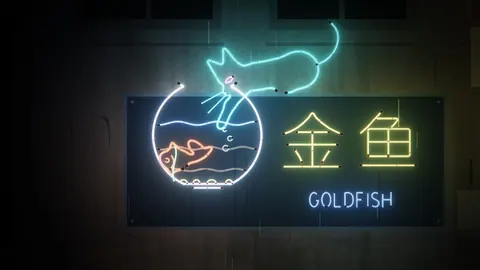 0:48 Neon tubes
Mascot animation
Midnight Snack: A neon cat on a café sign goes out for the goldfish on the sign at the end of the street, cracks its bowl, and runs the fading fish home through the rain to the goblet on its own sign. See the mascot animation video -
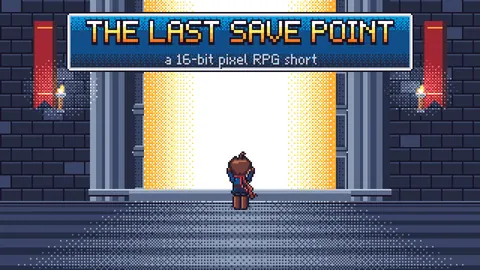 0:55 16-bit pixel RPG
Pixel art recap
The Last Save Point: At the final boss door, a hero saves the game, and the save screen replays the whole journey: memories drawn in fewer colours, a name greyed out in the party list, and full colour flooding back before the last slot is written. See the pixel art video -
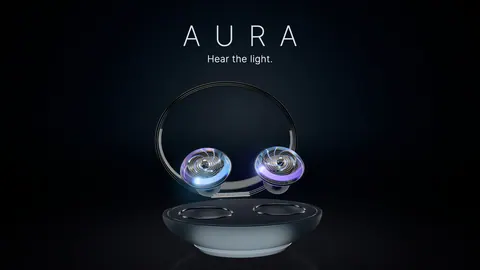 0:32 Glass product render
Product launch
Aura: Hear the Light: A fictional pair of glass earbuds in a pebble-shaped case is lit from outside in the dark, opened, seen through, taken apart, and snapped together on the drop, when sound becomes light inside the glass. See the product launch video
Sign up
Make your first ten videos this week.
Sign up with your email and we’ll get you set up with OpusCar.
We’ll only email you about your account. No spam.